Last-Minute Flight Deals offer a thrilling opportunity for spontaneous adventures. Securing these deals requires a blend of strategic planning and a dash of luck, but the potential rewards – significantly reduced airfare – are well worth the effort. This exploration delves into the world of last-minute flight bookings, providing insights into price fluctuations, effective search strategies, and budget management techniques to help you navigate the exciting, yet unpredictable, realm of last-minute travel.
We’ll examine factors influencing price changes, compare last-minute bookings to advance purchases, and equip you with the tools and knowledge to find the best deals. From utilizing reputable websites and apps to mastering flexible travel strategies, we’ll guide you through the process of securing affordable flights and making the most of your unexpected getaway.
Understanding “Last-Minute Flight Deals”
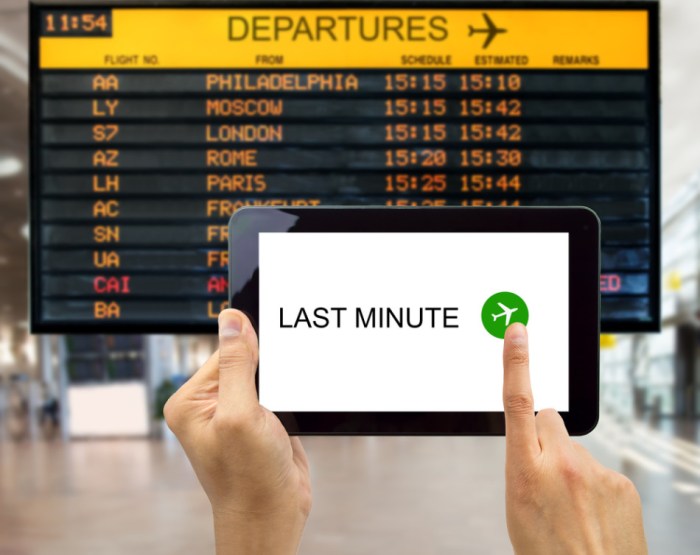
Securing a last-minute flight deal can be a thrilling experience, offering the chance to travel spontaneously at potentially significant savings. However, understanding the factors that influence these deals is crucial for maximizing your chances of finding a bargain. These deals are not always guaranteed, and their availability is subject to several dynamic elements.Last-minute flight prices are notoriously volatile. Several factors contribute to these fluctuations.
Airline revenue management systems play a significant role. Airlines constantly monitor seat availability and adjust prices based on demand. If a flight is close to full, prices may increase; conversely, if many seats remain unsold, prices may drop to fill the plane. The day of the week and time of year also impact pricing. Flights on weekends or during peak travel seasons tend to be more expensive, while mid-week flights during the off-season often offer better deals.
External factors, such as weather disruptions or unexpected events, can also cause price changes. Finally, the specific route and airline involved influence pricing. Highly competitive routes with multiple airlines usually offer better deals than less competitive routes.
Factors Influencing Last-Minute Flight Price Fluctuations
Several key factors contribute to the unpredictable nature of last-minute flight prices. These include airline revenue management algorithms, which dynamically adjust prices based on real-time demand and seat availability. Seasonal variations in demand also play a crucial role, with prices typically higher during peak travel periods and lower during off-season months. The day of the week is another significant factor, with weekend flights generally commanding higher prices than weekday flights.
Finally, external events, such as unexpected weather patterns or geopolitical instability, can create sudden shifts in price.
Typical Characteristics of Last-Minute Flight Deals
Last-minute flight deals often involve less popular destinations or smaller airlines. These destinations may be less in demand, leaving airlines with unsold seats they need to fill. Smaller airlines, less constrained by legacy systems, may be more flexible with their pricing strategies. The deals themselves are frequently characterized by short notice, limited availability, and potential restrictions on baggage allowances or flight changes.
Comparison of Last-Minute and Advance Booking
Booking flights last minute versus in advance presents a trade-off between price and flexibility. Advance booking often offers lower prices and a wider selection of flights and seats. However, it sacrifices flexibility, as changing plans can be costly. Last-minute booking, while potentially more expensive, offers greater flexibility as travel plans can be made more spontaneously. However, it comes with the risk of higher prices and limited seat availability.
Pros and Cons of Booking Flights Last Minute vs. in Advance
| Feature | Last-Minute Booking | Advance Booking |
|---|---|---|
| Price | Potentially higher, but sometimes surprisingly low | Generally lower |
| Flexibility | Higher; easier to adjust plans | Lower; changes often incur fees |
| Seat Availability | Lower; limited choices | Higher; wider selection of seats and flights |
| Planning | Requires spontaneity and adaptability | Allows for thorough planning and budgeting |
Finding Last-Minute Flight Deals
Securing a last-minute flight deal requires a strategic approach and a bit of luck. The key is to be flexible, persistent, and knowledgeable about the tools and techniques available to find the best prices. This section will equip you with the resources and strategies to successfully navigate the world of last-minute flight bookings.
Finding last-minute flight deals involves leveraging various online platforms and employing smart search techniques. Understanding how these platforms work and how to optimize your search parameters can significantly increase your chances of finding a great deal.
Reputable Websites and Apps for Finding Last-Minute Flights
Several reputable websites and apps specialize in aggregating flight data from various airlines, allowing you to compare prices and find the best deals. Using a combination of these tools often yields the most successful results.
- Google Flights: Known for its comprehensive search capabilities and flexible date options.
- Skyscanner: A popular metasearch engine that compares prices from numerous airlines and travel agencies.
- Kayak: Another widely used metasearch engine with robust filtering and sorting options.
- Momondo: Similar to Skyscanner and Kayak, Momondo offers a wide range of flight options and price comparisons.
- Expedia: A comprehensive travel booking platform offering flights, hotels, and rental cars, often with bundled deals.
Tips and Strategies for Maximizing Your Chances of Finding a Good Last-Minute Deal
While luck plays a role, proactive strategies can significantly improve your chances of discovering a last-minute bargain. These tips focus on optimizing your search and increasing your flexibility.
- Be flexible with your travel dates: Mid-week flights and those during off-peak seasons are often cheaper.
- Consider nearby airports: Expanding your search to include airports within a reasonable driving distance can unlock better deals.
- Use incognito mode: Some websites track your search history and may inflate prices based on your previous searches. Incognito mode prevents this.
- Set up price alerts: Many flight comparison websites allow you to set alerts, notifying you of price drops for your desired routes.
- Book on a Tuesday or Wednesday: Studies suggest that these days often have the best deals.
Step-by-Step Guide on Using Flight Comparison Websites Effectively
Effectively using flight comparison websites involves understanding their features and using them strategically. This guide provides a structured approach.
- Enter your desired destination and travel dates (or use flexible date options).
- Specify the number of passengers and cabin class.
- Utilize advanced filtering options to refine your search based on factors like flight duration, layover times, and airlines.
- Compare prices across different websites to ensure you’re getting the best deal.
- Carefully review the details of each flight before booking, paying attention to baggage fees, cancellation policies, and other terms and conditions.
Tips for Flexible Travel Dates and Destinations to Increase Deal Finding Chances
Flexibility is paramount when searching for last-minute deals. Being open to alternative dates and destinations dramatically increases your chances of finding a significantly lower price.
- Consider alternative airports: Flying into a smaller, less popular airport near your final destination can often lead to lower fares.
- Extend your trip: Adding a day or two to your travel dates can sometimes unlock cheaper fares.
- Explore nearby destinations: If your destination is flexible, consider nearby cities or towns that might offer better deals.
- Be open to different airlines: Don’t limit yourself to a specific airline; explore various options to find the best price.
- Utilize “explore” or “nearby destinations” features on flight comparison websites to discover potential alternatives.
Budgeting for Last-Minute Trips
Snapping up a last-minute flight deal can be incredibly exciting, but it’s crucial to approach the budgeting aspect strategically to avoid unexpected financial strain. Planning ahead, even for a spontaneous trip, is key to ensuring a fun and affordable getaway. This section will Artikel practical methods for managing your finances when booking a last-minute trip.Effective budgeting for last-minute travel requires a flexible yet disciplined approach.
Unlike meticulously planned trips, you’ll need to adapt quickly to available deals and prioritize essential expenses. This involves quickly assessing your financial resources, setting a realistic budget, and sticking to it. The key is to balance spontaneity with financial responsibility.
Finding Affordable Accommodation
Securing affordable accommodation when booking last minute can be challenging, but several strategies can help. Websites specializing in last-minute deals often offer significant discounts on hotels and vacation rentals. Consider exploring alternative accommodation options like hostels, guesthouses, or Airbnb for potentially lower prices than traditional hotels. Flexibility with your travel dates can also yield better results; mid-week stays often come with lower rates than weekend getaways.
Booking directly with smaller hotels or independent properties can sometimes bypass commission fees charged by online travel agencies, resulting in savings.
Minimizing Additional Expenses
Last-minute travel can sometimes lead to inflated prices for certain services. To mitigate this, careful planning is crucial. Packing light can help avoid checked baggage fees, a significant expense for many travelers. Utilizing free Wi-Fi hotspots instead of relying on expensive roaming data is another cost-saving measure. Similarly, opting for local transportation options like buses or subways instead of taxis can significantly reduce transportation costs.
Planning meals and snacks in advance, or utilizing local markets for groceries, is a smart way to reduce dining expenses compared to eating out constantly.
Sample Budget for a 3-Day Last-Minute Trip
Let’s imagine a 3-day last-minute trip to a nearby city. This example assumes a round-trip flight costing $200, found through a last-minute deal. Accommodation, booked through a budget-friendly platform like Airbnb, is estimated at $75 per night, totaling $225 for the three nights. Allocating $50 per day for food and activities brings the total to $150. Transportation within the city is estimated at $30.
This results in a total estimated budget of $605.
| Expense Category | Estimated Cost |
|---|---|
| Flights | $200 |
| Accommodation (3 nights) | $225 |
| Food & Activities (3 days) | $150 |
| Transportation | $30 |
| Total Estimated Budget | $605 |
Remember: This is a sample budget; costs will vary significantly depending on the destination, travel dates, and personal spending habits. Always factor in a buffer for unexpected expenses.
Flight Deals and Hacks
Securing the best flight deals often involves more than just luck; it requires a strategic approach and understanding of the airline industry’s pricing mechanisms. This section delves into insider tips and tricks, exploring the world of “flight hacking” and its potential to significantly reduce travel costs. We will examine successful strategies and highlight common mistakes to avoid.Flight deals are rarely random; they are influenced by a complex interplay of factors including seasonality, demand, competition, and even the day of the week you book.
Understanding these dynamics allows savvy travelers to maximize their chances of finding incredible savings. Flight hacking, while potentially rewarding, also presents certain challenges that require careful consideration.
Insider Tips for Securing the Best Flight Deals
Several strategies can significantly improve your chances of finding exceptional flight deals. These methods combine leveraging technology with an understanding of airline pricing practices.
- Be flexible with your travel dates: Mid-week flights and traveling during the off-season often yield lower fares. Consider flying on Tuesdays or Wednesdays, or exploring destinations less popular during peak travel times.
- Use flight comparison websites strategically: Don’t rely on just one website. Compare prices across multiple platforms like Google Flights, Skyscanner, Kayak, etc., as they may display different deals.
- Set up price alerts: Many flight comparison websites offer price alert features. This allows you to monitor price fluctuations for specific routes and receive notifications when prices drop.
- Consider nearby airports: Flying from a smaller, less congested airport can sometimes result in lower fares. Be willing to drive a bit further to save significantly on airfare.
- Book in advance or at the last minute (strategically): While last-minute deals can sometimes appear, booking well in advance often offers better deals, particularly for popular routes. The optimal booking window varies depending on the route and time of year.
Flight Hacking: Benefits and Drawbacks
Flight hacking involves using various techniques and strategies to find incredibly low airfares, often utilizing loopholes or combining different booking methods.
- Benefits: Potentially significant cost savings, access to otherwise unaffordable trips, and the thrill of finding unique travel opportunities.
- Drawbacks: Requires significant time and effort to research and plan, can be complex and involve multiple bookings, potential for disruptions due to unforeseen circumstances (like flight cancellations), and the risk of losing money if plans change.
Examples of Successful Flight Hacking Strategies
One common strategy involves using “mileage runs” to accumulate frequent flyer miles, then redeeming those miles for award flights. Another involves utilizing “error fares” – exceptionally low fares resulting from airline pricing errors – though these are often quickly corrected. Finally, combining budget airlines with low-cost connecting flights can often create surprisingly affordable international travel options. For example, flying a budget airline from City A to City B, then a different budget airline from City B to City C can be cheaper than a direct flight from City A to City C.
Common Flight Deal Mistakes to Avoid
The following infographic visually represents common mistakes travelers make when searching for flight deals.
Infographic Description: The infographic is titled “Avoid These Flight Deal Mistakes!” It features five distinct sections, each with a colorful icon and a brief explanation. The first section depicts a calendar with a red X over peak travel dates, highlighting the importance of flexible travel dates. The second section shows a magnifying glass over multiple flight comparison websites, emphasizing the need to compare prices across various platforms.
The third section displays a phone with a notification turned off, highlighting the benefit of setting price alerts. The fourth section shows a car driving a long distance to a smaller airport, illustrating the potential savings of using less popular airports. The fifth and final section shows a person frantically clicking a computer mouse at the last minute, highlighting the potential pitfalls of last-minute bookings and the benefits of strategic planning.
Each section is concise, visually appealing, and easily understandable.
Train Travel Guides
Train travel offers a unique alternative to air travel, providing a slower, often more scenic, and sometimes more comfortable journey. This guide explores the advantages and disadvantages of train travel compared to air travel, and provides practical advice for planning and enjoying your next train trip.
Train Travel Versus Air Travel: A Comparison
Choosing between train and air travel depends heavily on your priorities and the specifics of your journey. Domestically, trains often offer a more relaxed experience, eliminating airport security lines and allowing for greater comfort and movement during the trip. However, air travel typically boasts significantly faster travel times, especially over longer distances. Internationally, the difference becomes even more pronounced.
While high-speed rail networks are improving, long-distance international air travel remains the fastest option. Train journeys, however, often offer breathtaking views and a more immersive cultural experience, particularly in countries with well-developed rail systems like Europe or Japan. Consider factors like cost, travel time, comfort preferences, and the scenic appeal of the route when making your decision.
Planning a Train Trip: Booking and Packing
Booking train tickets in advance is highly recommended, especially during peak seasons or for popular routes. Many national and international rail companies offer online booking systems, allowing you to compare prices and schedules easily. Remember to check baggage allowances and restrictions, as these can vary depending on the railway company and the type of train. Packing for a train trip requires careful consideration of space and comfort.
Comfortable clothing, a good book or entertainment device, and snacks and drinks are essential. A neck pillow and eye mask can significantly enhance comfort during longer journeys. Remember to pack any necessary medications and travel documents.
Maximizing Comfort and Enjoyment During Train Journeys
To maximize comfort and enjoyment, consider booking a seat with extra legroom or a sleeping compartment for longer journeys. Bringing noise-canceling headphones can significantly reduce distractions and allow for relaxation. Utilize the onboard amenities, such as dining cars or observation carriages, to enhance your travel experience. Engage in activities such as reading, listening to music, or enjoying the scenery to pass the time.
Staying hydrated is also crucial for long journeys, so carry a reusable water bottle and refill it at onboard facilities.
Utilizing Train Travel Apps and Websites
Several apps and websites streamline train travel planning. Popular options include Rail Europe (for international travel in Europe), Trainline (for UK and European travel), and Amtrak (for US travel). These platforms allow users to search for routes, compare prices, book tickets, and access real-time train schedules and updates. Many also provide information on station facilities and nearby attractions. Familiarizing yourself with these tools can significantly simplify the planning process and ensure a smoother journey.
Cruise Ship Reviews
Choosing a cruise can be overwhelming with so many lines and ships to consider. This section will help you navigate the options by comparing different cruise lines based on price, amenities, and destinations, and providing detailed reviews of several popular choices. We’ll also Artikel key factors to help you make an informed decision.
Comparing Cruise Lines: Price, Amenities, and Destinations
Cruise lines vary significantly in their pricing structures, the amenities they offer, and the destinations they visit. Luxury lines like Regent Seven Seas Cruises and Silversea Cruises offer all-inclusive fares with premium amenities and often visit more exclusive destinations, resulting in a higher price point. Mass-market lines such as Carnival and Royal Caribbean offer a wider range of price points and itineraries, catering to a broader demographic with a variety of onboard activities and more accessible destinations.
Mid-range lines like Princess Cruises and Holland America Line fall between these two extremes, offering a balance of price, amenities, and itinerary options. For example, a seven-day Caribbean cruise on Carnival might cost significantly less than a similar cruise on Regent Seven Seas, but the latter would include things like unlimited premium beverages and shore excursions in the price.
Destinations also vary greatly; some lines specialize in Alaska cruises, others in the Mediterranean, and still others in the Caribbean.
Factors to Consider When Choosing a Cruise Ship
Several key factors should be considered when selecting a cruise. These include budget, desired amenities (e.g., spas, pools, fitness centers, kids’ clubs), preferred destinations, ship size (larger ships offer more amenities but can feel crowded; smaller ships offer a more intimate experience), the type of cruise experience desired (family-friendly, couples’ getaway, luxury, adventure), and the cruise line’s reputation for customer service.
Consider your travel style and priorities to narrow down your options. For instance, if you prioritize value and a lively atmosphere, a mass-market line like Carnival might be a good fit. If you prefer a more luxurious and intimate experience, a smaller, luxury line might be preferable.
Detailed Reviews of Popular Cruise Ships
Royal Caribbean’s Oasis of the Seas: A massive ship with a wide array of amenities, including water slides, ice-skating rinks, and Broadway-style shows. Strengths include its diverse activities and entertainment options. Weaknesses include potential crowds and a less intimate atmosphere.Disney Cruise Line’s Disney Dream: A family-focused ship with themed areas, character meet-and-greets, and kid-friendly activities. Strengths include the immersive Disney experience and excellent children’s programming.
Weaknesses include higher prices and potentially long lines for popular attractions.Norwegian Cruise Line’s Norwegian Escape: Known for its flexible dining options and freestyle cruising concept, offering a less structured experience. Strengths include the freedom to choose your own dining times and activities. Weaknesses may include a lack of structure for some travelers.
Key Features of Different Cruise Lines
| Cruise Line | Price Range | Amenities | Destinations |
|---|---|---|---|
| Carnival Cruise Line | Budget-friendly to mid-range | Water parks, live music, casual dining | Caribbean, Mexico, Bahamas |
| Royal Caribbean International | Mid-range to premium | Ice-skating rinks, Broadway shows, rock climbing walls | Caribbean, Europe, Alaska |
| Disney Cruise Line | Premium | Character meet-and-greets, themed areas, kids’ clubs | Caribbean, Bahamas, Alaska |
| Regent Seven Seas Cruises | Luxury | All-inclusive fares, butler service, fine dining | Worldwide destinations |
Budget Accommodation Tips
Securing affordable accommodation is crucial for maximizing your travel budget, especially when chasing last-minute flight deals. Smart choices in lodging can significantly impact your overall trip cost, allowing you to allocate more funds towards experiences and activities. This section explores various budget-friendly options and strategies to help you find the perfect place to stay without breaking the bank.
Comparing Budget Accommodation Options
Hostels and guesthouses represent two popular choices for budget travelers. Hostels, often favored by younger travelers, provide dormitory-style rooms and private rooms at significantly lower prices than hotels. They often foster a social atmosphere, offering opportunities to meet fellow travelers. Guesthouses, on the other hand, typically offer more privacy, often resembling small family-run hotels or bed and breakfasts. They may provide a more personalized experience but can sometimes be slightly more expensive than hostels, depending on location and amenities.
The choice depends largely on your personal travel style and preferences regarding privacy and social interaction.
Finding Affordable Accommodation in Popular Destinations
Popular tourist destinations often command higher accommodation prices. However, strategic planning can help you find affordable options. Consider staying slightly outside the city center, utilizing public transport to access attractions. This often results in significantly lower prices without drastically increasing commute times. Booking well in advance, even for last-minute trips if possible, can secure better rates, especially during off-peak seasons.
Searching for accommodations in less-touristy neighborhoods can also uncover hidden gems at lower prices. Finally, exploring local options, such as Airbnb experiences, can offer unique and affordable alternatives to traditional hotels.
Negotiating Lower Accommodation Prices, Last-Minute Flight Deals
Negotiating accommodation prices, particularly in less formal settings like guesthouses or directly with owners, is possible. This is especially true during the off-season or if you’re booking for an extended stay. Politely inquiring about discounts or special offers can sometimes yield positive results. Mentioning your intention to stay for several nights or your willingness to book directly, bypassing online booking platforms, may also lead to a negotiated lower rate.
Being flexible with your dates can also improve your bargaining position, as businesses are more likely to offer discounts during less busy periods.
Websites and Apps for Budget-Friendly Accommodation
Several online resources specialize in finding budget-friendly accommodation. Hostelworld is a popular platform specifically dedicated to hostels, offering a wide selection and user reviews. Booking.com and Expedia, while offering a broader range of accommodations, also provide filtering options to find budget-friendly choices. Airbnb offers a unique range of options, from private rooms to entire apartments, often providing more local experiences at competitive prices.
Finally, consider using Google Hotels, which aggregates listings from various platforms, allowing for easy price comparison.
Vacation Rentals and Airbnb
Vacation rentals, often booked through platforms like Airbnb, offer a compelling alternative to traditional hotels, providing a unique blend of home comforts and independent travel experiences. This section will explore the key differences between these accommodation types, offer guidance on securing the perfect rental, and weigh the advantages and disadvantages of using vacation rental platforms.
Vacation Rentals versus Hotels: A Comparison
Hotels and vacation rentals cater to different traveler needs and preferences. Hotels typically provide standardized services, including daily housekeeping, readily available amenities like pools and restaurants, and consistent levels of comfort. They often excel in terms of convenience and predictability. In contrast, vacation rentals, such as those found on Airbnb, offer more space, often a kitchen for self-catering, and a more personalized experience reflecting the local character.
This increased space and flexibility can be particularly appealing to families or groups traveling together. However, services may be less consistent, and amenities are not always guaranteed. The level of cleanliness and maintenance can also vary more significantly between properties than in hotels.
Finding the Perfect Vacation Rental on Airbnb
Successfully navigating the vast selection of vacation rentals available on Airbnb and similar platforms requires a strategic approach. Begin by defining your needs – location, desired amenities (pool, Wi-Fi, parking), number of bedrooms and bathrooms, and your budget. Thoroughly review listings, paying close attention to guest reviews and photos. Verify the accuracy of the listing description by comparing it with the photographs.
Look for properties with clear and detailed descriptions, many high-quality photos showcasing all aspects of the space, and a history of positive guest reviews. Finally, communicate directly with the host to clarify any uncertainties before booking, confirming details like check-in/check-out procedures and house rules.
Pros and Cons of Using Vacation Rental Platforms
Vacation rental platforms like Airbnb offer significant advantages, primarily the opportunity to experience a destination like a local. The increased space and often lower cost compared to hotels are attractive to budget-conscious travelers and families. The availability of kitchens enables cost savings by preparing some meals. However, potential drawbacks include the lack of consistent service levels compared to hotels, the risk of encountering unexpected issues with the property or the host, and the absence of readily available on-site support.
It’s also important to be aware of potential hidden costs, such as cleaning fees or security deposits.
Essential Checklist Before Booking a Vacation Rental
Before confirming your booking, a comprehensive checklist is essential. This should include verifying the property’s location and proximity to key attractions, carefully reviewing the listing description and photos, scrutinizing guest reviews for both positive and negative feedback, and understanding the cancellation policy. Confirming the total cost, including any additional fees, and the host’s communication responsiveness are equally vital.
Finally, read the house rules carefully and ensure you understand and agree to them before committing to the booking.
Hotel Reviews and Tips
Securing comfortable and affordable accommodation is crucial for a successful trip, whether you’re traveling for leisure or business. Choosing the right hotel involves careful consideration of your needs, budget, and travel style. This section provides reviews of various hotel types and offers practical tips to help you navigate the hotel booking process.
Hotel Review Examples
This section offers brief reviews of different hotels, highlighting their key features and services. Remember that experiences can vary, and these are based on general observations and common feedback.Hotel A: A budget-friendly option located near the city center, Hotel A provides clean, functional rooms with basic amenities. While not luxurious, it’s a practical choice for travelers on a tight budget who prioritize location over lavish amenities.
Guests often praise its convenient location and friendly staff.Hotel B: Hotel B is a mid-range hotel known for its comfortable rooms, a decent on-site restaurant, and a small swimming pool. It’s a solid choice for families or travelers seeking a balance between comfort and affordability. Reviews generally highlight the cleanliness and helpful service.Hotel C: Hotel C represents a luxury option, boasting spacious rooms, exceptional service, and a range of high-end amenities such as a spa, fine-dining restaurants, and a rooftop pool.
It caters to discerning travelers seeking an opulent and memorable stay. However, it comes with a significantly higher price tag.
Choosing the Right Hotel
Selecting a hotel requires careful consideration of several factors. Prioritize your needs: consider proximity to attractions, transportation links, and the amenities most important to you. For business travelers, proximity to conference centers or business districts might be crucial. Families might prioritize amenities like kids’ clubs or swimming pools. Solo travelers might prefer boutique hotels with a unique atmosphere.
Strategies for Obtaining the Best Hotel Deals
Several strategies can help secure the best possible hotel rates. Booking in advance often leads to lower prices, especially during peak season. Consider traveling during the off-season or shoulder seasons for better deals. Utilizing hotel booking websites and comparing prices across different platforms can uncover significant savings. Loyalty programs and subscription services can also offer exclusive discounts and perks.
Finally, be flexible with your travel dates; prices often fluctuate depending on the day of the week and time of year.
Comparison of Hotel Types
The table below compares different hotel types based on several key characteristics. Remember that these are generalizations, and individual hotels within each category can vary significantly.
| Hotel Type | Price Range | Amenities | Target Audience |
|---|---|---|---|
| Budget | $50-$150 per night | Basic rooms, limited amenities | Budget-conscious travelers, solo travelers |
| Mid-Range | $150-$300 per night | Comfortable rooms, some amenities (pool, restaurant) | Families, business travelers, couples |
| Luxury | $300+ per night | Spacious rooms, extensive amenities (spa, fine dining) | Discerning travelers, high-end clientele |
| Boutique | Variable | Unique design, personalized service, often located in desirable areas | Travelers seeking unique experiences |
RV and Camper Travel
Embarking on a journey in an RV or camper offers a unique blend of freedom and adventure, allowing travelers to explore at their own pace and immerse themselves in the landscapes they traverse. This mode of travel provides a home-away-from-home, complete with sleeping quarters, cooking facilities, and often, even entertainment systems, making it a popular choice for families, couples, and solo adventurers alike.
The versatility of RV and camper travel allows for a range of experiences, from exploring national parks to visiting remote beaches.
Types of RVs and Campers
Choosing the right RV or camper depends heavily on individual needs and travel style. The market offers a wide variety of options, each with its own set of advantages and disadvantages. Consider factors like budget, desired level of comfort, and the types of terrain you plan to navigate.
- Class A Motorhomes: These are the largest and most luxurious RVs, resembling buses in size and offering extensive amenities. They are typically self-contained, meaning they have all the necessities for comfortable living, including full kitchens, bathrooms, and sleeping areas. However, their large size makes them less maneuverable and more expensive to operate and maintain.
- Class B Motorhomes (Camper Vans): These are smaller and more compact than Class A motorhomes, often built on a van chassis. They are more fuel-efficient and easier to drive, making them suitable for exploring winding roads and tight spaces. While generally less spacious than Class A, they offer a good balance of maneuverability and comfort.
- Class C Motorhomes: These RVs fall between Class A and Class B in terms of size and features. They typically feature an over-cab sleeping area, offering more space than camper vans but less than large Class A motorhomes. This makes them a popular choice for families.
- Travel Trailers: These are towed behind a vehicle and offer a wide range of sizes and amenities. They are generally more affordable than motorhomes but require a separate vehicle for towing. The size and weight of the trailer must be carefully considered in relation to the towing vehicle’s capabilities.
- Fifth-Wheel Trailers: These trailers are larger than travel trailers and connect to the truck bed via a fifth-wheel hitch. They offer a spacious interior and are often preferred for long-term travel, but require a powerful truck for towing.
Planning an RV or Camper Trip
Thorough planning is crucial for a successful RV or camper trip. This involves careful consideration of your route, campsite reservations, and potential challenges along the way. Failing to plan adequately can lead to unexpected delays, inconveniences, and even safety hazards.Route planning should incorporate factors such as distance, road conditions, and available campsites. Many online tools and apps can assist with this process, allowing you to visualize your route and identify potential points of interest along the way.
For example, using Google Maps with its RV-specific settings can help avoid low bridges or narrow roads unsuitable for larger RVs. Securing campsite reservations in advance is especially important during peak seasons, as popular campgrounds can fill up quickly. Websites such as ReserveAmerica and Recreation.gov provide access to various campground reservation systems.
Maintaining and Operating an RV or Camper
Regular maintenance is essential for ensuring the safe and reliable operation of your RV or camper. This includes routine checks of fluids (engine oil, coolant, transmission fluid), tire pressure, and brake systems. Understanding the functionality of various systems, such as the water heater, plumbing, and electrical systems, is crucial for troubleshooting minor issues and preventing major breakdowns. Familiarize yourself with your RV’s manual and consider taking a short course on RV maintenance or consulting with experienced RVers for advice.
Regular cleaning is also essential for maintaining a comfortable and sanitary living environment.
Advantages and Disadvantages of RV and Camper Travel
RV and camper travel offer a unique set of advantages and disadvantages. Weighing these factors carefully before embarking on a trip is essential for a positive experience.
- Advantages: Flexibility, cost-effectiveness (when compared to hotels and flights for extended trips), immersive travel experience, convenience, ability to bring pets and more belongings.
- Disadvantages: Maintenance responsibilities, potential for mechanical breakdowns, limited maneuverability (especially with larger RVs), campsite availability, potential for higher fuel costs.
Unique Stays and Treehouses
Escaping the ordinary and embracing unique accommodation options can significantly enhance your travel experience. From rustic charm to luxurious seclusion, alternative lodging choices offer a memorable alternative to traditional hotels. This section explores the exciting world of unique stays, providing insights into finding, booking, and enjoying these distinctive accommodations.
Examples of Unique Accommodation Options
Unique accommodations extend far beyond the typical hotel room. Consider the romantic allure of a treehouse nestled amongst the leaves, offering unparalleled views and a connection with nature. Alternatively, a yurt, a traditional nomadic dwelling, provides a taste of cultural immersion and comfortable simplicity. For those seeking a blend of rustic charm and modern comfort, a beautifully appointed cabin in a secluded woodland setting offers tranquility and relaxation.
Other options include glamping (glamorous camping) in luxurious tents, quirky converted barns, and even stays in converted lighthouses or castles, each offering a distinctive atmosphere and unforgettable experience. These diverse choices cater to a wide range of preferences and budgets.
Tips for Finding and Booking Unique Accommodations
Locating and securing unique accommodations requires a strategic approach. Start by identifying your desired location and the type of accommodation that appeals to you most. Utilize specialized websites and platforms dedicated to showcasing unique stays, filtering your search by features like pet-friendliness, proximity to attractions, or specific amenities. Read reviews carefully to gain insights into the actual experience of previous guests.
Book in advance, especially during peak seasons, to secure your preferred dates and avoid disappointment. Communicate clearly with the host regarding any special requests or concerns before your arrival.
Pros and Cons of Staying in Unique Accommodations
Staying in unique accommodations presents both advantages and disadvantages. On the positive side, these stays often offer a more immersive and memorable experience, providing a stronger connection with the local environment and culture. They frequently boast unique features and amenities not found in standard hotels, such as breathtaking views, private hot tubs, or access to outdoor recreational activities.
However, unique accommodations may lack some of the conveniences of traditional hotels, such as readily available room service or 24-hour concierge services. They might also be located in more remote areas, requiring personal transportation or limiting access to nearby amenities. Careful consideration of these factors is essential when making your choice.
Websites and Platforms for Finding Unique Stays
Several online platforms specialize in connecting travelers with unique accommodation options. Airbnb, a well-known platform, offers a vast selection of unique stays worldwide, ranging from treehouses and yurts to converted barns and castles. VRBO (Vacation Rentals By Owner) provides another excellent resource for finding unique vacation rentals directly from owners. Other specialized websites, such as Glamping Hub (focused on glamorous camping options) and Canopy & Stars (specializing in treehouses and unique outdoor stays), offer curated collections of distinctive accommodations.
These platforms often provide detailed descriptions, high-quality photos, and guest reviews to aid in your decision-making process.
Houseboat and Yacht Stays
Choosing between a houseboat and a yacht vacation offers a unique set of considerations, depending on your desired level of luxury, adventure, and desired travel style. Both provide a memorable escape from traditional accommodations, but cater to different preferences.Houseboats and yachts represent distinct approaches to water-based vacations. Houseboats generally prioritize comfort and space, resembling floating homes, while yachts emphasize speed, maneuverability, and often a higher level of luxury.
Houseboat versus Yacht Stays: A Comparison
Houseboats typically offer more interior space, often including multiple bedrooms and living areas, making them ideal for families or larger groups. They are designed for leisurely cruising and spending extended periods moored in scenic locations. Yachts, on the other hand, are built for speed and agility, often featuring sleek designs and high-performance engines. While some yachts offer comfortable living spaces, the focus is usually on the experience of navigating the waters.
The cost difference is significant, with houseboat rentals generally being more affordable than yacht charters, particularly for larger groups.
Planning a Houseboat or Yacht Trip
Booking a houseboat or yacht requires careful planning. Begin by determining your desired location and the length of your trip. Research available rental companies and compare prices, amenities, and included services. Check reviews from previous renters to gauge the quality and condition of the vessel. Ensure you have all necessary licenses and certifications if you plan to operate the vessel yourself.
Make a detailed packing list, including clothing suitable for both water activities and evenings on board. Provisioning for your trip is crucial; consider creating a detailed meal plan and purchasing groceries accordingly. For safety, familiarize yourself with the vessel’s safety features and emergency procedures. Consider travel insurance to protect against unforeseen circumstances.
Enjoying Your Houseboat or Yacht Stay
To maximize enjoyment, plan your itinerary in advance. Research local attractions, restaurants, and activities. If you’re renting a houseboat, choose mooring locations with scenic views and access to amenities. For a yacht charter, consider engaging a captain and crew to handle navigation and onboard services, allowing you to relax and enjoy the journey. Pack appropriate clothing and gear for various weather conditions.
Remember to respect the environment and follow responsible boating practices. Engage in water sports, such as swimming, fishing, or kayaking, depending on the location and the type of vessel. Capture the memories with photos and videos to cherish your unique experience.
Advantages and Disadvantages of Houseboat and Yacht Stays
Houseboat stays offer advantages such as spacious living areas, affordability (relative to yachts), and a relaxing pace. However, they may be slower and less maneuverable than yachts, limiting exploration possibilities. Yachts offer speed, luxury, and the thrill of navigating open waters, but they often come with a higher price tag and require more expertise to operate safely. Furthermore, yacht charters may not offer the same level of self-sufficiency as houseboats, often requiring reliance on a crew for certain tasks.
Successfully navigating the world of last-minute flight deals demands preparedness and adaptability. By understanding the factors that influence pricing, employing effective search strategies, and budgeting wisely, you can transform impulsive travel desires into affordable realities. Remember, flexibility is key – open-mindedness regarding destinations and travel dates dramatically increases your chances of securing exceptional savings. Embrace the thrill of the unexpected and unlock the potential for unforgettable last-minute adventures.
Question & Answer Hub: Last-Minute Flight Deals
What are the best days to book last-minute flights?
Generally, Tuesdays and Wednesdays often offer better deals, as airlines tend to adjust pricing mid-week.
Are last-minute flights always cheaper?
No, while some last-minute deals exist, prices can also be higher due to limited availability. Thorough research is crucial.
Can I change or cancel a last-minute flight?
Policies vary greatly depending on the airline and fare type. Carefully review the terms and conditions before booking.
What if my last-minute flight is delayed or cancelled?
Airlines are obligated to provide assistance in such cases, which may include rebooking or compensation. Refer to the airline’s passenger rights policy.